
Expanding the Meaning of Care Beyond Cure
– Dr Lipika Patra, Meerut
My journey as a palliative care specialist began in Keralam, where I witnessed the remarkable impact of a community-based model in delivering compassionate, patient-centred care. This foundation was further enriched through my experiences in corporate hospitals. I learned the hospice model from Karunashraya in Bengaluru and the home-based care approach from CanSupport in Delhi. Each of these models reinforces the critical importance of integrating palliative care into mainstream healthcare systems.
As the wife of an Indian Army doctor, I have long carried a quiet yet enduring calling to contribute meaningfully to the lives of serving soldiers, veterans, and their families- especially in moments of deep vulnerability. Throughout my journey, I have observed significant barriers like limited awareness, resistance to change, attitudinal challenges, and lack of structured education and training which delay or prevent the adoption of an integrative palliative care model that could significantly enhance quality of life, and provide holistic support to patients and their families within the Armed Forces.
Palliative care is often misunderstood as being limited to cancer, but its scope extends far beyond. It is equally essential for patients living with chronic and life-limiting conditions such as chronic obstructive pulmonary disease, chronic liver disease, chronic renal failure, congestive heart failure, motor neuron disease, cerebrovascular accidents (CVA), spinal cord injuries, paraplegia or hemiplegia, HIV/AIDS, cerebral palsy, dementia, Alzheimer’s disease, and various geriatric conditions.
The Armed Forces represent a unique confluence of cultures, with soldiers drawn from each state, bringing distinct languages, communication styles, family structures, caregiving roles, and spiritual beliefs about life and death. Yet within this complexity, I recognized a critical gap- the need to introduce palliative care at the right time and in the right way. By acknowledging and respecting the diverse cultural and social backgrounds of patients and their families, we can build a more inclusive and compassionate approach to healthcare. Integrating palliative care within Armed Forces hospitals is not merely a medical necessity; it is a moral responsibility that aligns deeply with the ethos of service, sacrifice, and the preservation of dignity.
Beyond Serendipity: When Compassion Finds a Way
Though not formally part of the military healthcare system, I have always sought to weave the principles of palliative care into the system- whether through teaching, mentoring, or serving as a bridge between civilian and service hospitals. A defining moment came in February 2024, when my husband was got posted to the Military Hospital in Meerut. Around the same time, I was approached by an in-service anaesthetist seeking help for her mother, who had been diagnosed with advanced metastatic renal cell carcinoma. What began as a few consultations for symptom relief gradually evolved into a deeply human journey of care.
As her illness progressed, managing her pain became challenging, eventually requiring oral morphine, an essential pain medication that was not readily available at the military hospital. This gap led me to connect with CanSupport, an NGO in Meerut providing home-based palliative care (a branch of CanSupport Delhi). Their team stepped in seamlessly, offering not just medications but also emotional support. For the family, this was a revelation, an unexpected source of comfort during an otherwise overwhelming time.
The most delicate phase followed conversations around advance care planning and end-of-life preferences. The patient’s wish was simple yet profound. She wanted to spend her final days at home, surrounded by her loved ones, especially her twin grandsons. Honouring her choice, we coordinated all necessary arrangements, including medications, syringe pumps, and anticipatory prescriptions. Constant support was provided by military hospital medical team and the CanSupport team. She passed away peacefully at home, surrounded by those she cherished most.
From a Personal Story to a Larger Vision: Building a Compassionate Care Model
This became a turning point in the journey, highlighting not only a critical gap but also a powerful opportunity to integrate geriatric and palliative care into the military healthcare system.
It brought to light the unmet needs of frail elderly patients with multiple comorbidities, bedridden individuals, and those living with chronic or life-limiting illnesses. These patients require care that goes beyond curative treatment; care that is holistic, compassionate, and attentive to physical, emotional, social, and spiritual well-being. This realization marked a crucial shift in perspective and gave direction to meaningful action.
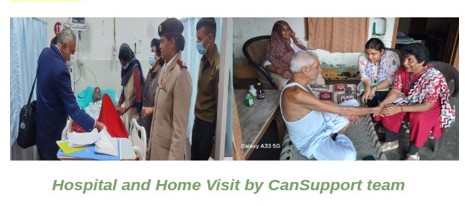
We initiated conversations around integrating structured geriatric and palliative care services within the Military Hospital. With strong teamwork and leadership support, we began identifying patients who could benefit from early palliative interventions. We also facilitated coordinated care with the CanSupport team during hospital stays and ensured that, upon discharge, patients were seamlessly referred for home-based palliative care maintaining continuity and support beyond hospital settings.
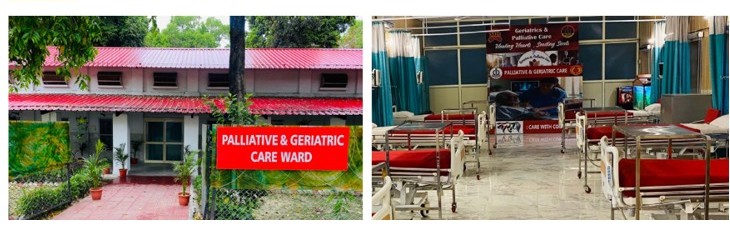
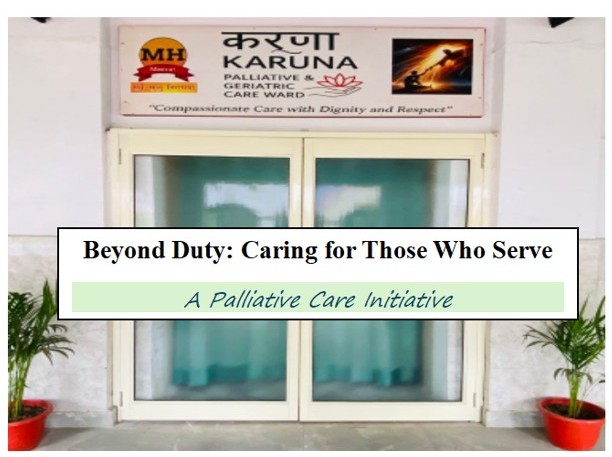
Our collective efforts led to a significant milestone, the establishment of an 8-bedded geriatric and palliative care centre at the Military Hospital, Meerut, under the Army’s Central Command. This achievement marked not just the creation of a dedicated space, but the beginning of a structured, compassionate approach to care within the Armed Forces healthcare system.
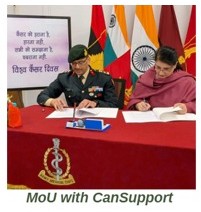
Additionally, formalizing our partnership with CanSupport in February 2025, through a Memorandum of Understanding strengthened the continuum of care between hospital and home.
A Step Toward Lasting Change: From Initiative to Impact
Simultaneously, capacity-building became a key focus of this initiative. We organized skill-based workshops, online training sessions, and in-person teaching programs for nursing officers and young medical officers to strengthen both knowledge and practice in geriatric and palliative care.
This journey has been both humbling and inspiring. It is a reminder that meaningful change rarely begins with grand design; it often starts with a single patient, a single family, and a single act of empathy. Integrating palliative care into the Armed Forces healthcare system has the potential to shift the focus from merely prolonging life to enhancing its quality—ensuring dignity, comfort, and compassionate support for those who have dedicated their lives to the nation, and for the families who stand beside them.
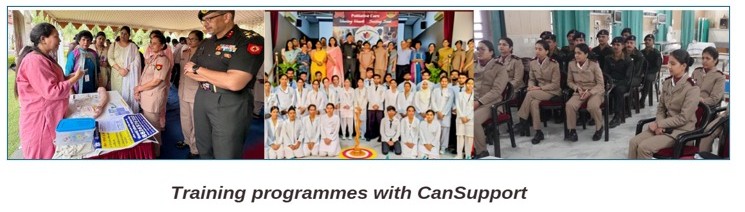
To honour the “Centenary Year Celebration of the Military Nursing Service”, an awareness program was conducted on 20th September 2025 in collaboration with the CanSupport team. More than 200 nurses from various medical colleges of Meerut and Military Nursing Officers attended the program. Another awareness program was initiated on 12th March 2026 in hybrid mode, conducted over a period of six weeks, to sensitize the Military Nursing Officers of Central Command. A diverse panel of speakers from the Armed Forces, Border Security Force, and retired military nurses from across the country shared their academic and professional experiences. This enriching session on geriatric and palliative care created a valuable platform for shared learning, reflection, and inspiration.
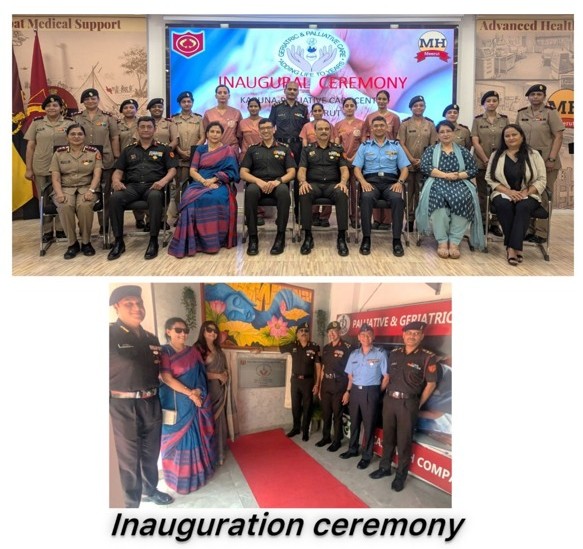
The formal inauguration of the Geriatric and Palliative Care Ward on 25th April 2026, followed by a multidisciplinary panel discussion, represents more than a milestone; it signals a commitment to bridging gaps in care delivery and care continuum.
The collective insights of experienced professionals from both Armed Forces and civilian background highlighted unmet needs, challenges, and the importance of an integrated model, a multi-institutional collaborative approach, and capacity building.
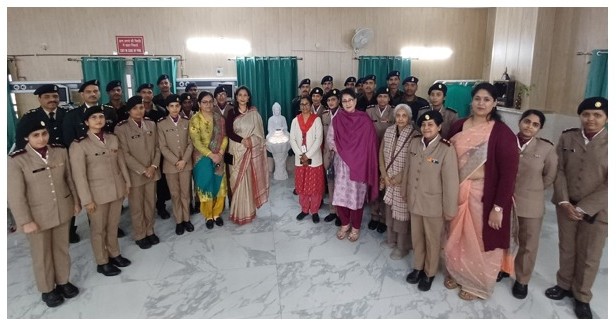
About the Team:
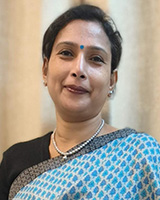
Dr. Lipika Patra has completed her Master’s in Public Health from the Sree Chitra Tirunal Institute for Medical Sciences and Technology in Thiruvananthapuram, in Keralam and an MSc in Palliative Medicine from Cardiff University, United Kingdom. She has been practicing palliative care for the past 13 years across various healthcare sectors. She is currently working as an Honorary Palliative Care Specialist at the Military Hospital in Meerut.